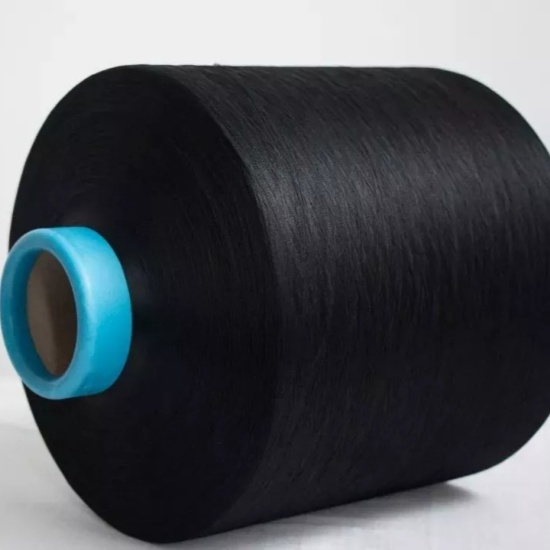
Hilado elástico de falsa torsión es un tipo de hilado elástico que utiliza las propiedades termoplásticas de fibras sintéticas como el poliéster y el nailon. Se calienta y moldea durante la torsión de la fibra y la deformación por rizado para fijar el estado torsionado y rizado, dando como resultado un hilado elástico esponjoso, elástico y sin torsión. Debido al ligero par de torsión y la buena elasticidad del hilado, se denomina hilado elástico de falsa torsión.
La fibra se retuerce hasta adquirir una determinada forma y luego se destuerce, y el hilado mantiene la holgura del estado torsionado, pero sin torsión. El método de procesamiento tradicional adopta el método de tres pasos mencionado anteriormente, mientras que actualmente se completa en un solo paso en una máquina de hilado elástico de falsa torsión. Sus fibras tienen buena torsión y elasticidad, por lo que es posible desarrollar tejidos crepé y tejidos elásticos con buen efecto crepé.
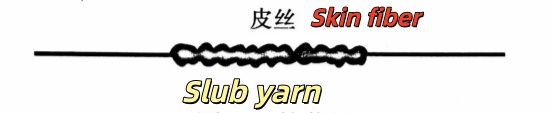
Al mezclar fibras elásticas de falsa torsión con otras fibras individuales y retorcerlas juntas, debido a la sobrealimentación por separación, la superficie de las fibras mezcladas presenta segmentos regulares en forma de bambú, que están completamente cubiertos por las fibras de revestimiento, en lugar de que las fibras de revestimiento y las fibras del núcleo estén retorcidas una junto a la otra. Este es el hilado de segmentos de bambú (Hilado flameado)) desarrollado en el mercado.
El rango de longitud de los nudos de bambú en las fibras de bambú es de 1-15 cm, y el número de nudos de bambú por metro puede ajustarse entre 3-10. La tensión de los nudos de bambú puede ajustarse mediante una sujeción firme sin deslizamiento, o mediante una sujeción floja, en la que puede producirse deslizamiento.
Fabricado con poliéster MOY (hilado de velocidad media) o poliéster POY (hilado preorientado, hilado de alta velocidad) como materias primas, mediante estirado y falsa torsión en una máquina de un solo paso. En la sección de estirado, las secciones gruesas y finas del hilado se producen debido a los diferentes grados de estiramiento, y la deformación del hilado en la sección de falsa torsión logra una apariencia con secciones gruesas y finas y un rendimiento esponjoso. El hilado elástico producido con secciones gruesas y finas se denomina hilado de falsa torsión irregular.
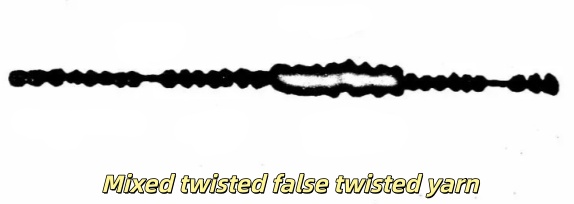
Durante el procesamiento del hilado, se forman dos tipos de torsión, positiva y negativa, en las zonas de torsión y destorsión. Por lo tanto, en general, las torsiones positiva y negativa se cancelan entre sí y se convierten en "sin torsión", mientras que existen torsiones positivas y negativas en algunas partes del hilado, dando como resultado un hilado deformado de falsa torsión mixta, que tiene dos tipos: tipo de hebra individual y tipo de fibra mixta.





 Compatible con red IPv6